Back to RTG Spectrum

SDR-Shark

Spectrum collector and analysis module for the RTG Spectrum platform.

SDR-Shark provides the platform's SDR-facing spectrum workflow: synthetic or live IQ sessions, FFT, waterfall, scanner controls, decoded activity, and RF/ML hooks that can feed shared timeline and operator-review layers.

Platform module

A repeatable SDR collector workflow reviewers can run without radio hardware.

The public demo generates deterministic synthetic IQ data locally, starts the SDR-Shark backend and frontend, activates replay, and exposes the browser workflow used for spectrum visualization and signal review. In the RTG Spectrum architecture, SDR-Shark is the spectrum collector and analysis module that can publish evidence into broader normalization, correlation, and operator workflows.

Run the public Docker demo in one command:

docker compose -f docker-compose.demo.yml up --build

What It Demonstrates

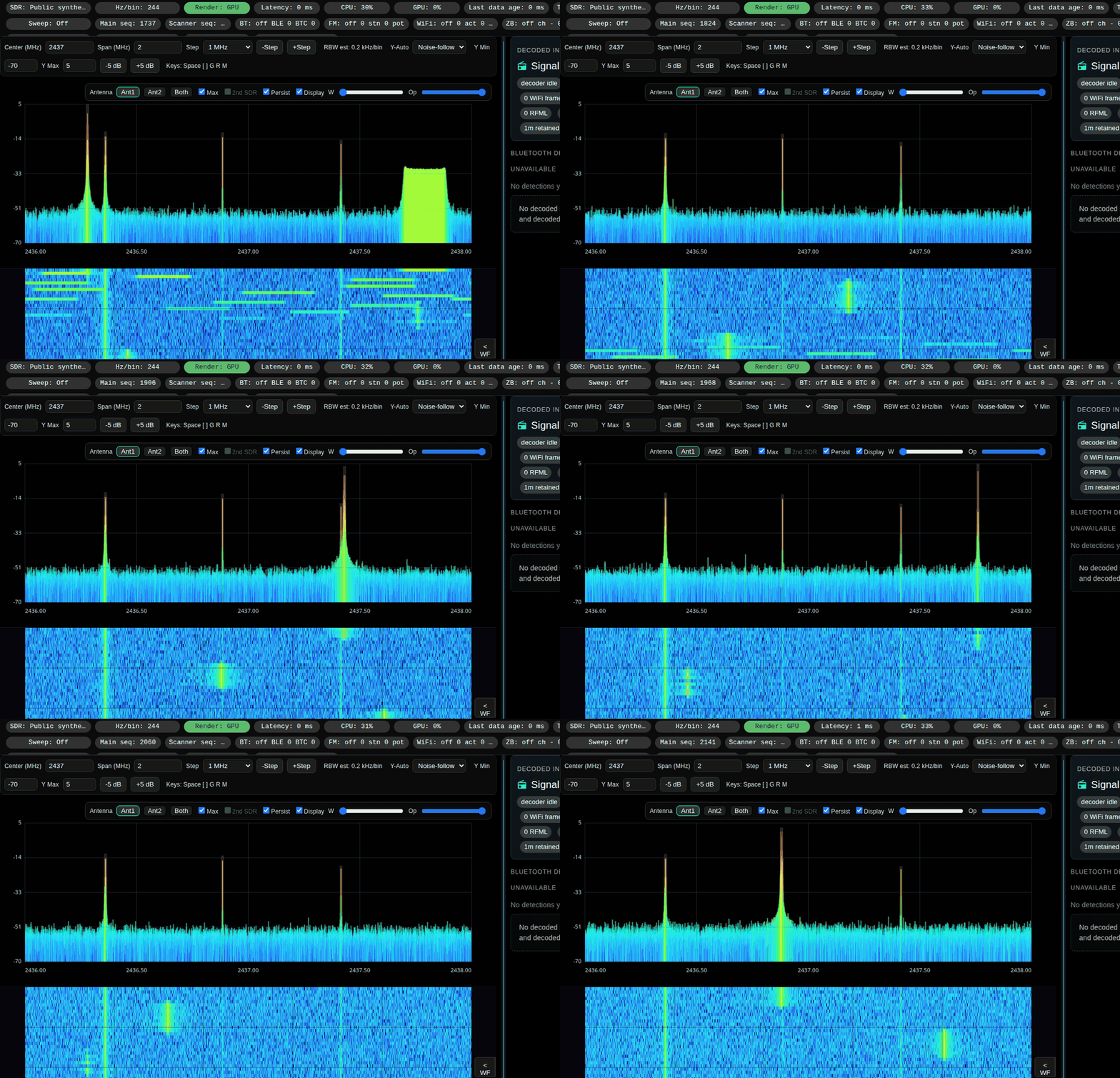
  • Stationary receiver view of a Bluetooth-like frequency-hopping emitter with replay-backed FFT, max-hold, persistence, and waterfall views
  • Scanner-oriented spectrum workflows and signal activity panels
  • Python backend APIs for IQ sessions, replay control, and live data
  • Docker packaging for one-command public demonstration
  • Integration points for RF classification and gateway-backed SDR deployments
Live interface

Browser-based spectrum, waterfall, and signal activity views.

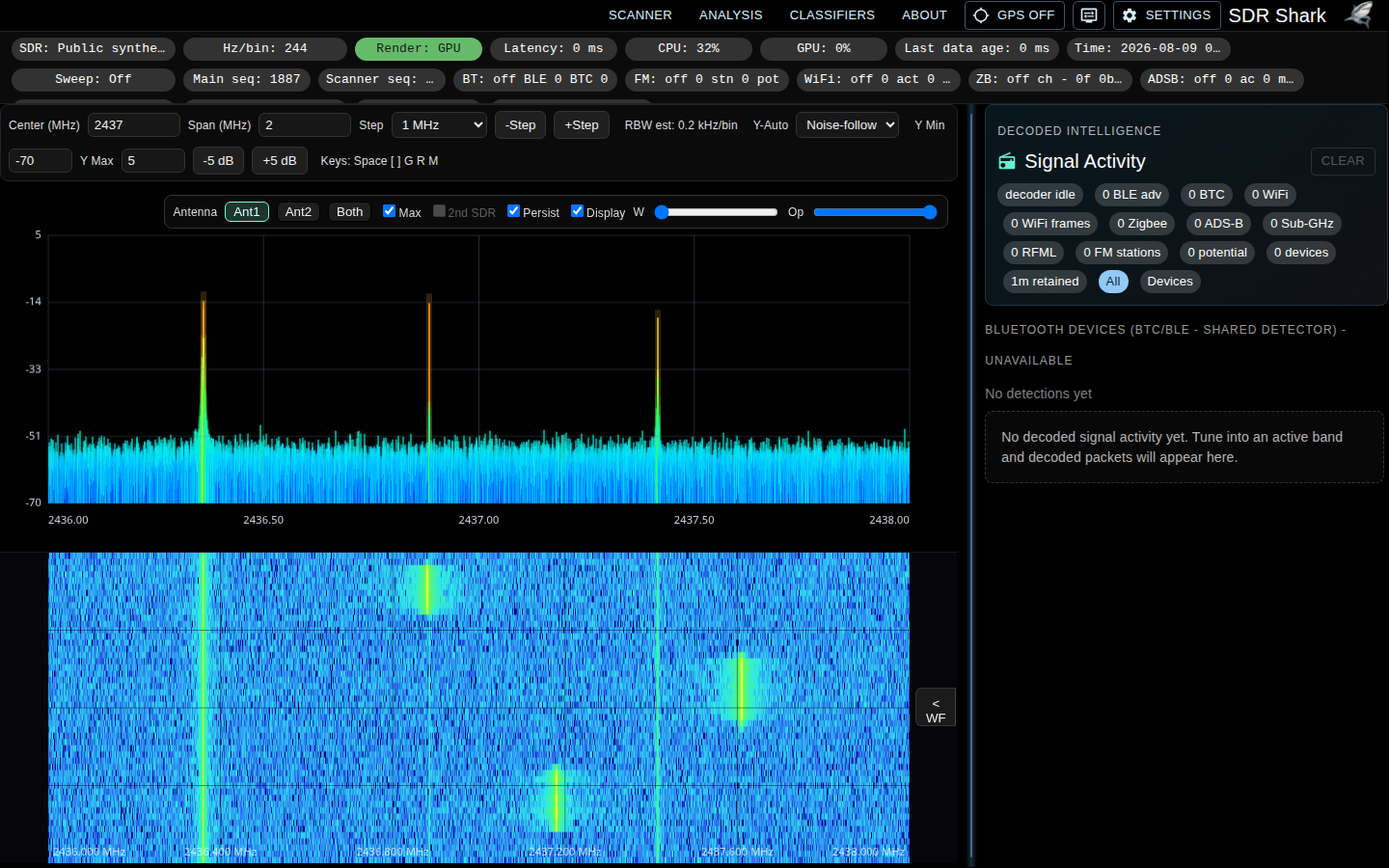
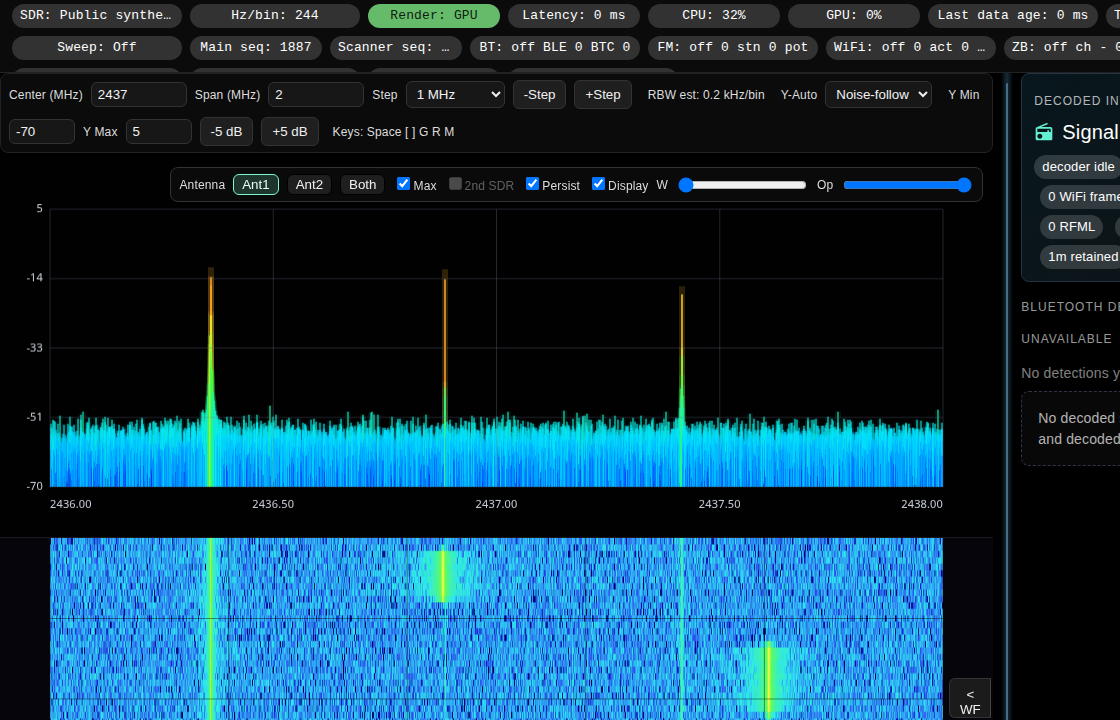
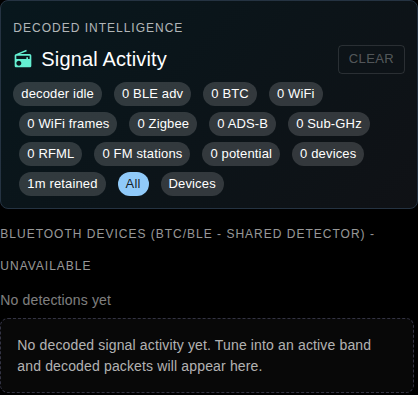
SDR-Shark presents RF software as an operator-facing web application: spectrum traces, waterfall history, decoded activity cards, scanner configuration, settings dialogs, and analysis workflows are visible from the browser rather than hidden inside scripts or notebooks. Those views provide the SDR-facing evidence layer for broader RF signal classification, collect, normalize, correlate, baseline, and detect-change workflows.

SDR-Shark public demo showing a Bluetooth-like frequency-hopping synthetic emitter in the spectrum and waterfall interface

What this helps teams do

Move SDR work from lab-only scripts into repeatable prototype evidence.

Reduce manual RF triage

Use replayable FFT, waterfall, activity cards, and scanner views to review signal behavior faster.

Prototype without hardware gates

Package deterministic demo data so stakeholders can evaluate the workflow before every radio path is available.

Feed shared analysis

Turn spectrum observations into event-ready evidence that can flow into Trace Analyzer and other review tools.

Engineering scope

Where this applies.

Collector Module

Prototype receive pipelines, scanner dwell plans, replay tools, dashboards, and integration glue for software-defined radio systems.

Event-Ready Evidence

Turn IQ streams, FFT products, detected activity, and metadata into reviewable interfaces and normalized evidence artifacts.

RF/ML Integration

Prepare hooks for classifier workflows, feature extraction, model-backed labeling, and signal-family exploration.

Demo Packaging

Create deterministic, public-safe demonstrations that let stakeholders evaluate a working system without lab hardware.